
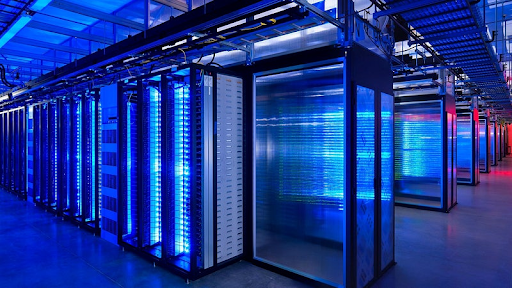
The financial figures behind the AI revolution are staggering. The industry is on track to spend nearly $3 trillion on datacenters by 2028. But a new report from Goldman Sachs highlights a massive secondary cost: $720 billion in grid spending will be needed just to power them.
This $3tn spend is financing a rapid expansion of global datacenter capacity, which currently sits at 59 gigawatts (GW). Goldman Sachs expects this capacity to double by 2030, driven by AI’s intense energy demands. This year, 7GW of new capacity will be completed, and work will start on another 10GW—a draw equivalent to a third of the UK’s power grid.
This build-out is creating mega-projects like the $500bn “Stargate” venture and Elon Musk’s “colossus.” It’s also fueling record valuations, with AI chipmaker Nvidia becoming the world’s first $5tn company, and Google’s parent, Alphabet, reporting a $100bn quarter.
But the $720bn grid cost reveals the immense physical-world constraints of the digital boom. The AI revolution doesn’t just run on algorithms; it runs on power, and the world’s grids are not prepared. This spending will be necessary to prevent blackouts and support the doubling of datacenter capacity.
While some debate if the $3tn spend is a “bubble,” the $720bn grid cost is a hard physical and financial reality. The AI boom is not just a tech investment; it’s one of the largest infrastructure and energy projects in modern history.