
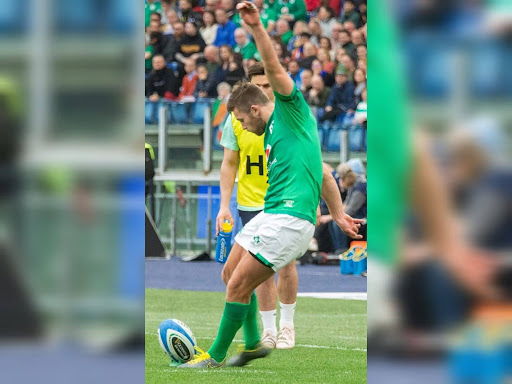
Ross Byrne has suggested that ball-in-play time may be declining under tactical approaches dominated by kicking strategies. The Gloucester fly-half’s analysis reflects concern that rule enforcement changes are inadvertently reducing actual playing time as teams increasingly employ aerial tactics that create more stoppages.
World Rugby’s crackdown on escort defending has encouraged teams to kick more frequently, with each high kick creating potential stoppage for reset or penalty. Statistical evidence demonstrates that kicking strategies produce higher possession recovery rates, but potentially at cost of reduced ball-in-play time.
Byrne’s critique focuses on entertainment implications of declining ball-in-play time. He expressed concern that matches featuring frequent aerial contests with associated stoppages may be less engaging for spectators than those featuring continuous phase play with higher ball-in-play percentages.
The Irish international’s analysis highlights unintended consequence of rule enforcement that officials may not have anticipated. His suggestion that tactical changes driven by escort defending enforcement could reduce ball-in-play time reflects concern about cumulative impact on match quality.
Despite concerns about ball-in-play implications, Byrne remains focused on Gloucester’s improving fortunes. Following five consecutive Premiership defeats, recent victories against Harlequins and Castres have generated momentum ahead of their European fixture against Munster.