
Western horizons hold profound symbolic significance across Cornwall’s prehistoric landscape, representing gateways between earthly existence and otherworldly realms. This symbolic geography emerges from observable natural phenomena—the sun’s daily descent into western darkness—combined with cultural interpretations that associated these directions with death, transformation, and eventual rebirth consistent with cyclical cosmological frameworks.
The sun’s westward journey creates natural metaphor for life’s progression toward death. Daily observation shows the sun traveling from eastern birth at dawn through southern maturity at noon toward western decline and eventual darkness. This astronomical pattern provided framework for understanding human life cycles, with western horizons representing transition points where existence moved from visible to invisible, known to unknown.
Winter solstice intensified western symbolism by positioning the sun at its most southerly setting point along the western horizon. This represented not just daily death but annual maximum darkness—a profound moment when the solar death metaphor achieved its fullest expression before the turning point that promised eventual rebirth.
The Isles of Scilly’s position precisely where winter solstice sun descended added layers to western gateway symbolism. These flickering islands—sometimes visible, sometimes not—embodied liminality appropriate to gateway concepts. Their appearing and disappearing nature suggested boundaries between realms were permeable and unstable, with the western horizon functioning as threshold where such transitions occurred.
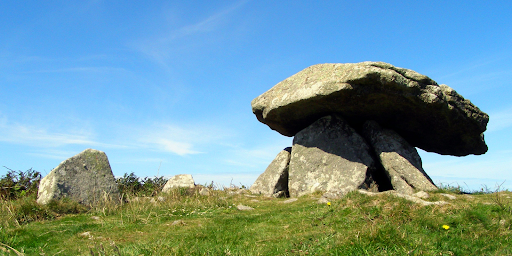
Burial practices incorporating western orientations demonstrate how death symbolism influenced monument functions. Chûn Quoit functioned simultaneously as burial chamber and astronomical observation point, positioning the dead to face eternally toward the western gateway where winter solstice sun descended. This orientation suggested beliefs about the dead’s continued participation in cosmic patterns and their proximity to otherworldly realms accessed through western portals.
Rebirth symbolism balanced death associations, creating cyclical frameworks where western endings enabled eastern beginnings. The sun’s western death each evening preceded its eastern rebirth each dawn. Winter solstice’s western solar extreme preceded the turning that initiated the sun’s return journey. This cyclical pattern transformed death from absolute ending into transition necessary for renewal.
Contemporary understanding of western gateway symbolism comes through archaeological interpretation of monument orientations and comparative analysis of widespread cultural associations between western directions and death. The Montol festival’s torch-lit procession toward the sea enacts movement toward the western horizon, maintaining ritual engagement with directional symbolism even when contemporary participants may hold different beliefs about death and afterlife.
Modern observers standing at Tregeseal circle and watching winter solstice sunset over the Isles of Scilly can experience the western gateway’s visual drama even without sharing prehistoric cosmological frameworks. The sun’s descent toward distant islands creates spectacle that transcends specific belief systems, demonstrating universal human responses to astronomical phenomena. This combination of observable natural patterns, prehistoric symbolic interpretation, and continuing experiential engagement demonstrates how western gateway concepts persist across cultural transformations, maintaining Cornwall’s distinctive winter solstice heritage that acknowledges death while celebrating the cyclical rebirth encoded in the sun’s eternal return from its western extreme.