
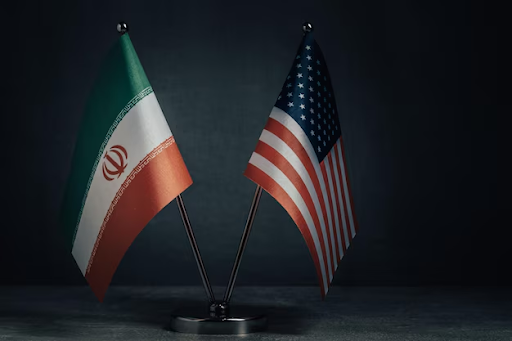
Agreement on guiding principles is a beginning, not an end — and the Iran-US nuclear talks in Geneva on Tuesday illustrated clearly how much distance remains before a final deal could be reached. A profound trust deficit between the two parties, accumulated over decades of hostility, sanctions, airstrikes, and proxy conflicts, hangs over every sentence of every diplomatic exchange.
Foreign Minister Araghchi described the session as constructive and reported agreement on principles after about three and a half hours of indirect talks, facilitated by Oman. Both sides agreed to exchange draft texts before a third meeting in roughly two weeks — procedural progress that reflected a shared, if cautious, commitment to keeping the process alive.
The substance of the talks underscored the trust problem. The US demands comprehensive IAEA verification because it does not trust Iran’s assurances. Iran insists on its right to enrich uranium because it does not trust that America would refrain from military action even after a deal. Each side’s maximalist positions are, in part, a reflection of the profound distrust they have accumulated toward the other.
Iran’s offer to dilute its 60% enriched uranium and expand IAEA access was presented as a trust-building step — a tangible action that could be verified rather than merely promised. The US demand for a complete halt to domestic enrichment was framed as the only verification-proof arrangement that could give Washington sufficient confidence. Both positions had their own internal logic; both were also shaped by the history of a broken relationship.
In the background, that broken relationship continued to manifest itself in familiar ways: US warships in the Gulf, Iranian military exercises in the Strait of Hormuz, Khamenei’s military threats, and inside Iran, the mass prosecution of protesters and the systematic dismantling of the reformist political movement. Trust, in this environment, would have to be built very slowly and very carefully.