
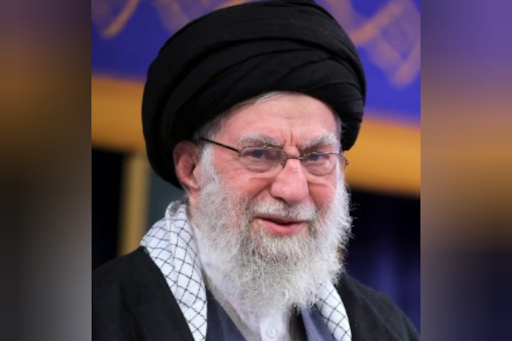
When historians assess Khamenei’s tenure, they will be grappling with a record that is simultaneously a story of remarkable institutional endurance and catastrophic strategic failure. He led a country of nearly 100 million people through four decades of confrontation with the world’s most powerful military and economic bloc, resisted enormous pressure, and kept the Islamic Republic functioning. He also left his country isolated, economically devastated, and ultimately unable to prevent the military strikes that killed him.
The confrontation with the West was not simply imposed on Khamenei — it was, in significant part, a choice. His insistence on maintaining support for groups that the United States and Israel designated as terrorist organizations, his nuclear program, his human rights record, and his rhetoric created the conditions for the sanctions and ultimately the military escalation that defined his later years.
What he received in return was a form of political legitimacy rooted in resistance. For a significant segment of Iranian and broader Muslim-world opinion, the Islamic Republic’s defiance of American and Israeli pressure was genuinely admirable — evidence that a non-Western country could maintain its independence against enormous external coercion. This was real political capital, even if it came at enormous material cost.
The problem was that the costs became increasingly difficult to justify to ordinary Iranians whose living standards were declining, whose political freedoms were nonexistent, and who were watching talented compatriots leave the country in large numbers for opportunities unavailable at home. The January massacre was in many ways the final proof that the regime had lost the capacity to generate popular consent and was surviving entirely through coercion.
His death at the hands of the adversaries he spent his life defying is, in a certain reading, the ending that his choices made likely. The legacy he leaves is one that Iranians will be debating for generations.