
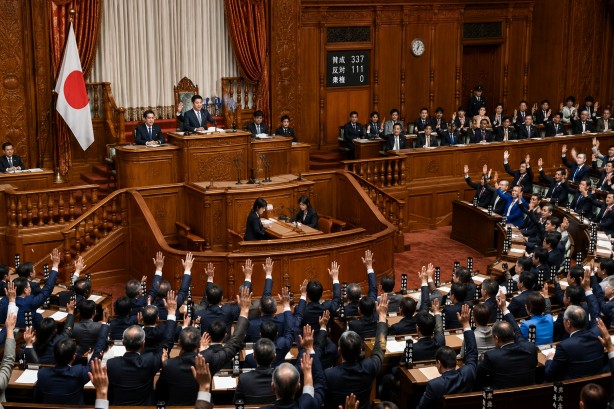
Japan’s Lower House has moved forward with a significant legislative step by passing a bill designed to amend the Imperial House Law. This measure aims to address the diminishing size of the imperial family, a concern that has garnered late support from the Centrist Reform Alliance. The proposed changes focus on allowing female members of the imperial family to maintain their royal status after marriage and enabling male-line descendants from former imperial branches to rejoin the imperial family through adoption.
The legislation’s provision that permits sons born to these adoptees to become eligible for the throne has ignited political debate. The ruling Liberal Democratic Party (LDP) champions the reforms as essential to uphold Japan’s age-old tradition of male-line imperial succession, pointing to the dwindling number of heirs within the current imperial family. This argument underscores the necessity for these reforms, according to the LDP, to ensure the continuity of the imperial lineage.
Having secured backing from multiple political parties, the bill has successfully cleared the Lower House. However, it now faces the next hurdle in the Upper House, where it is expected to undergo rigorous examination. Opposition lawmakers have signaled their intent to propose amendments and challenge the adoption-related elements of the bill, indicating a contentious path ahead for the legislation.
The debate surrounding the bill highlights the broader societal discussion on gender roles and modernizing traditions within Japan’s monarchy. While the focus remains on preserving historical customs, the proposed changes could signal a shift in how the imperial family might adapt to contemporary expectations.