
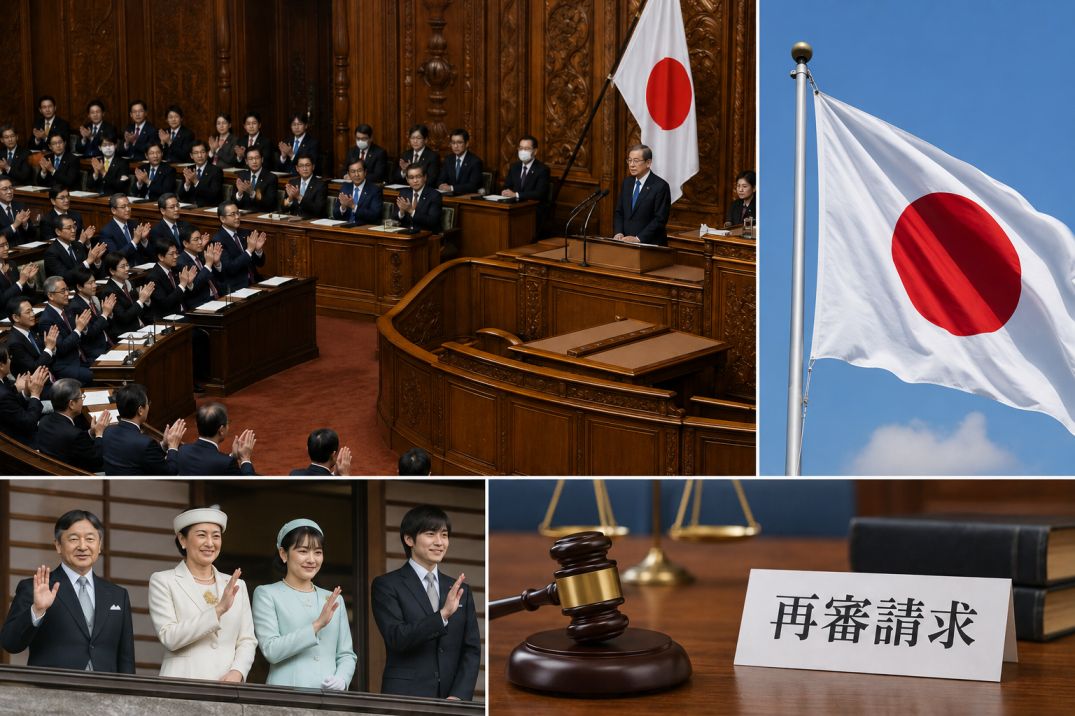
Japan’s parliament has enacted three pivotal laws, marking significant shifts in the nation’s legal landscape. Among these, the most notable is the first major amendment to the Imperial House Law since 1947. This revision allows female members of the imperial family to maintain their royal status after marriage and facilitates the adoption of male descendants from former imperial branch families, a move aimed at bolstering the imperial succession system.
In addition to the changes in the Imperial House Law, the Japanese legislature has passed a law criminalizing the public desecration of the national flag. Under this new regulation, individuals found guilty of such acts could face penalties of up to two years in prison or fines amounting to 200,000 yen. Proponents argue the law serves to protect national symbols, while critics express concerns about potential implications for freedom of expression.
Another significant legislative reform approved by parliament involves changes to the criminal retrial process. These reforms are designed to expedite the review of wrongful conviction cases, addressing long-standing delays within the system. However, the measure has faced opposition from several parties that argue it does not sufficiently ensure transparency and the disclosure of evidence, indicating a fractious debate around its implementation.
These legislative changes reflect broader efforts to address various social and legal challenges within Japan. The amendments to the Imperial House Law particularly highlight efforts to modernize the imperial system, addressing issues of gender equality and succession continuity. Similarly, the criminalization of flag desecration and the reforms to the retrial process underscore ongoing dialogues about national identity and judicial efficiency.