
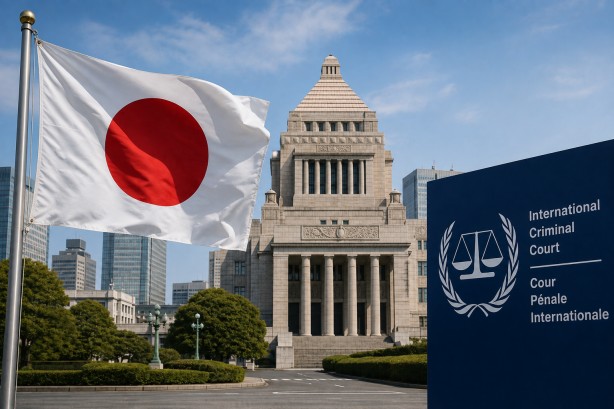
Japan has expressed a reserved stance in response to the United States’ decision to sanction Tomoko Akane, the president of the International Criminal Court (ICC). Prime Minister Sanae Takaichi described the move as “very unfortunate,” signaling Japan’s intent to maintain its diplomatic discussions with the U.S. and other involved nations. While Japan refrains from directly criticizing the Trump administration, officials stress the importance of preserving the country’s alliance with the United States, its sole treaty ally.
As the ICC’s largest financial backer, Japan has played a significant role by contributing substantial personnel to the court. Tomoko Akane, a former Japanese prosecutor, has been serving as an ICC judge since 2018 and made history in 2024 as the first Japanese citizen elected as president of the court. The U.S., however, has adopted an increasingly hostile attitude toward the ICC, with President Donald Trump authorizing sanctions against its personnel in February 2025. U.S. Secretary of State Marco Rubio has expressed the administration’s intent to weaken the ICC and rally allies against it.
Japan’s response to the U.S. sanctions has been notably cautious. The government opted not to join a collective international statement condemning the U.S. action, citing the importance of its relationship with Washington as a reason for its restraint. This decision drew criticism from Akane, who urged Japan to demonstrate stronger support for the ICC and uphold the rule of law. Despite this, Japan’s government has consistently shown support for both Akane and the court, with Prime Minister Takaichi reaffirming this commitment during her meeting with Akane in Tokyo in January.
Japan’s approach underscores its delicate balancing act between upholding its international obligations and maintaining its critical alliance with the United States. The sanctions against Akane, a figure of considerable standing within the ICC and the broader international legal community, place Japan in a challenging diplomatic position. As discussions continue, Japan aims to navigate these tensions without compromising its longstanding relationship with its key ally, the U.S.