
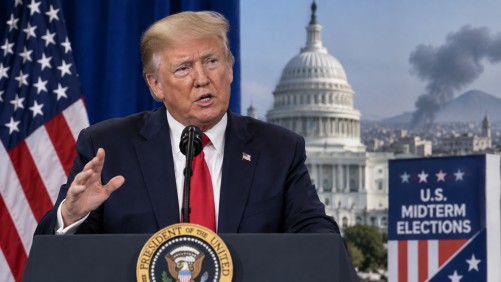
US President Donald Trump has forecasted an end to the conflict between the United States and Iran following the US midterm elections in November. He anticipates a significant drop in oil prices once the hostilities cease. During a press briefing in Dublin, Trump accused Iran of trying to extend the conflict to impact the US elections but speculated that the situation could resolve shortly after the midterms.
In contrast, Iranian President Masoud Pezeshkian emphasized that Iran does not desire war or prolonged conflict. Speaking at the BRICS Summit in New Delhi, Pezeshkian reiterated Iran’s commitment to peace and advocated for regional security to be managed by local nations rather than through US intervention.
The ongoing conflict has created turmoil in energy markets, with tensions around the Strait of Hormuz driving up oil prices. Crude oil has recently surpassed $100 a barrel, reflecting the market’s volatility amid these geopolitical tensions. The situation remains precarious as efforts to reach a lasting settlement have not yielded significant progress, and low-level fighting continues.
The uncertainty surrounding the conflict has fueled apprehension regarding the stability of regional security and the impact on global energy supplies. With no clear resolution in sight, the future remains unpredictable, raising concerns about the broader implications for international markets and diplomatic relations.