
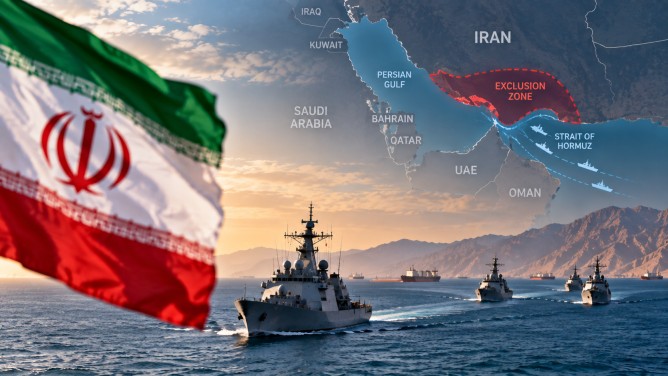
Iran has announced plans to create an “exclusion zone” near the Strait of Hormuz, a critical waterway for global oil and gas supplies. This move targets vessels that Iran suspects of trying to pass through the strait. Mohsen Rezaei, the newly appointed head of Iran’s Supreme National Security Council, stated that the zone would stretch from the area of the U.S. naval blockade toward the Strait of Hormuz and into the Arabian Gulf. Vessels identified as attempting to enter this zone with the intent to cross the strait might be added to an Iranian sanctions list.
This announcement comes amid heightened tensions following a U.S. military action against three Iranian oil tankers, an escalation after Iran launched ballistic missiles at U.S. warships. Additionally, Iran claimed to have targeted an unmanned U.S. vessel trying to enter the strait, an allegation denied by the U.S. military. The confrontation underscores the strategic importance of the Strait of Hormuz, where disruptions could impact energy prices and the global economy.
The United States has boosted its naval presence to enforce a blockade on Iranian ports, aimed at curbing Tehran’s oil exports. This military stance accompanies heightened economic sanctions as diplomatic negotiations between Washington and Tehran have faltered. Both nations accuse each other of violating agreements, further stalling talks.
Despite the ongoing conflict, U.S. officials report that a significant amount of oil continues to transit through the Strait of Hormuz, aided by naval escorts and alternative regional pipelines. Iran, while pursuing diplomatic solutions, insists on stronger assurances in any future agreements. The situation remains tense as both sides navigate the delicate balance between military posturing and diplomatic engagement.