
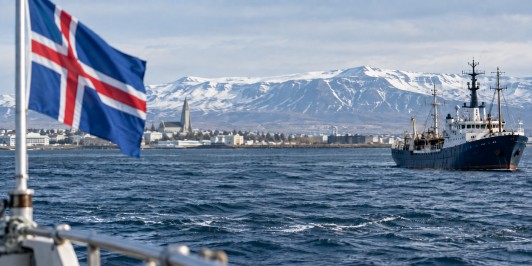
Iceland is moving to permanently prohibit commercial whaling, a significant legislative step that would leave Japan and Norway as the last nations engaged in this practice. The Icelandic government plans to present the bill to parliament in February, after years of contentious debate and resistance from animal welfare and conservation organizations. The proposed legislation aims to establish a permanent ban, effectively ending Iceland’s involvement in commercial whaling.
Iceland’s whaling industry primarily targets fin whales, which are considered a vulnerable species. During the hunting season from June to September, dozens of these whales have been captured under a quota sanctioned by the government. The proposed ban has garnered backing from animal welfare groups, who argue against commercial whaling on ethical, environmental, and conservation grounds.
Despite an international moratorium introduced in 1986 to safeguard whale populations, Iceland resumed commercial whaling in 2006. Norway followed suit in 1993, and Japan resumed whaling in its waters in 2019 after withdrawing from the International Whaling Commission. If Iceland’s legislation is passed, it will mark a significant shift, positioning Norway and Japan as the sole countries continuing the practice of commercial whaling.
The international moratorium on whaling does not extend to indigenous communities in certain areas, including parts of Greenland and Alaska, where whale hunting is allowed for nutritional, cultural, and traditional reasons. Iceland’s move to outlaw commercial whaling reflects growing global pressure and the increased influence of conservationist movements.