
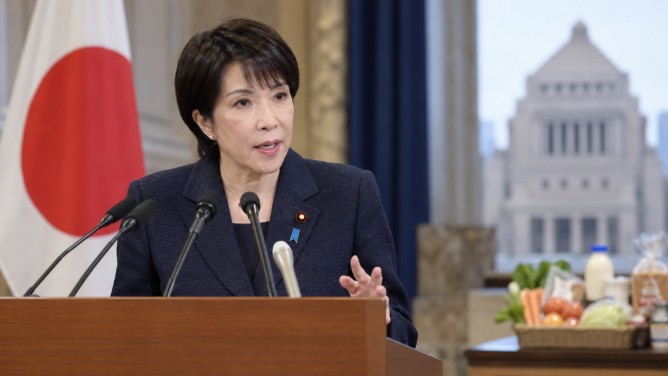
Japanese Prime Minister Sanae Takaichi has announced that the government will not extend the two-year reduction in the consumption tax on food and beverages, set to expire in March 2029. This decision comes amid concerns about fiscal sustainability and maintaining confidence in Japan’s public finances. Takaichi emphasized the importance of consumption tax revenue in financing essential social security programs.
During parliamentary discussions on the proposed tax legislation, Takaichi clarified that the government plans to revert the tax rate to its original level once the temporary reduction ends. The legislation, which includes financial assistance for low- and middle-income households, aims to secure approval during the current extraordinary parliamentary session.
Takaichi underscored the necessity of being financially prepared for unexpected emergencies, such as major natural disasters and infectious disease outbreaks. She highlighted the critical need for stable public finances to effectively address these potential challenges.
The proposal has sparked criticism over how the government plans to offset the anticipated loss in tax revenue. While Takaichi has promised to cover the shortfall without issuing additional deficit-financing bonds, she has yet to provide detailed funding arrangements. Opposition parties have expressed concern that reinstating the tax rate could increase the financial burden on households already struggling with living costs.
This debate illustrates the complex challenge Japan’s government faces in balancing the provision of temporary relief to consumers with the protection of public finances and ensuring sustainable funding for social security. The outcome of this legislative proposal will be closely watched as it navigates parliamentary scrutiny.