
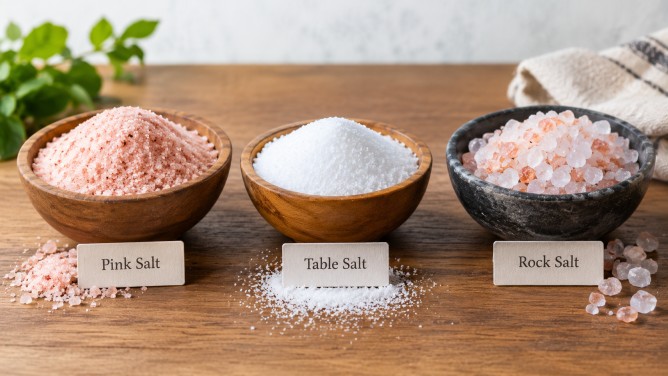
Choosing the right type of salt for iodine intake is essential for maintaining thyroid health. Iodised table salt, pink Himalayan salt, and rock salt are common options, but they differ significantly in their iodine content, which is a crucial mineral for the thyroid gland to produce hormones that regulate metabolism and support growth.
Iodised table salt is the most reliable source of iodine among these varieties. During processing, a controlled amount of iodine is added to ensure it meets nutritional requirements. However, not all table salt is iodised, so it’s important to check packaging labels to confirm its iodine content. While iodised salt is effective in preventing iodine deficiency, it should still be consumed in moderation due to the risk of high blood pressure from excessive sodium intake.
Pink Himalayan salt is often chosen for its distinctive color and natural reputation, but it is not a dependable source of iodine unless specifically fortified and labelled as such. The trace minerals that give it its color do not substitute for a balanced diet or adequate iodine intake. Similarly, rock salt, used in traditional cooking, typically lacks iodine unless fortified, making it an unreliable choice for meeting daily iodine needs.
The recommended daily intake of iodine for most adults is about 150 micrograms, with increased requirements during pregnancy and breastfeeding. Besides iodised salt, iodine can be sourced from dairy products like milk and yoghurt, eggs, seafood, and fortified foods. Those on vegetarian or vegan diets, which may lack these iodine-rich foods, should ensure they get enough iodine from other sources, potentially consulting a healthcare professional for guidance.
When selecting salt, it’s important to look for an iodised label if relying on it for iodine intake. Proper storage in a dry, covered container helps maintain the salt’s quality. It’s also crucial to adhere to the World Health Organization’s recommendation of less than 5 grams of salt per day from all sources to avoid excessive sodium consumption.
Ultimately, iodised table salt is typically the most dependable option for meeting iodine needs, while pink Himalayan and rock salts may be used according to personal preferences but should not replace iodised versions. Maintaining a varied and balanced diet is key to supporting thyroid health and overall well-being.