
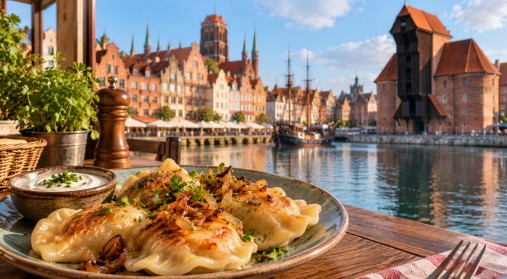
In the heart of Poland, Gdańsk stands out as a city rich in history and culinary delights, particularly known for its pierogi. These beloved dumplings, a staple of Polish comfort food, are celebrated for their variety and adaptability, featuring an array of fillings that cater to both traditional and modern tastes.
Pierogi are typically filled with classic ingredients such as potato and cheese, cabbage and mushroom, or minced meat. Restaurants in Gdańsk have also embraced creative interpretations, offering combinations that push the boundaries of traditional flavors. Diners can appreciate the craftsmanship of these dumplings, especially when they are first boiled and then lightly fried, resulting in a pleasing contrast between a tender center and a crisp exterior. Accompaniments like sour cream and fried bacon enhance the richness and texture of the dish.
Visitors to Gdańsk can enjoy a diverse culinary experience, as many local establishments prepare pierogi by hand, allowing patrons to witness the intricate preparation process. Some eateries have even dedicated their entire menu to this iconic dish, showcasing a multitude of varieties that are boiled, baked, or fried. Potato-and-cheese pierogi, when paired with sour cream and savory toppings, remain a perennial favorite among locals and tourists alike.
Beyond the traditional offerings, contemporary chefs in Gdańsk are redefining the pierogi experience by introducing unusual ingredients and innovative fillings. The city’s menus now feature dumplings filled with meat, seafood, and vegetables, alongside sweet options that intrigue the adventurous palate. This blend of time-honored recipes and modern flair makes Gdańsk a compelling destination for those seeking a unique culinary journey.
For those exploring Gdańsk, sampling a variety of pierogi rather than committing to a single large serving can provide a richer understanding of the diverse flavors and cooking styles that define this dish. Pierogi in Gdańsk exemplify more than just a national delicacy; they represent a vibrant part of Poland’s culinary heritage that continues to evolve while maintaining its traditional roots.