
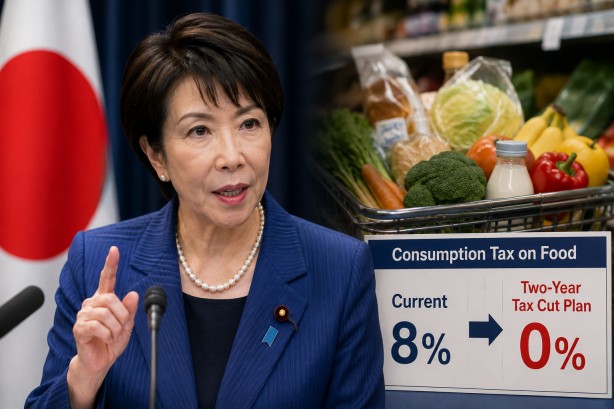
In a bid to alleviate financial pressures on households, Japanese Prime Minister Sanae Takaichi has put forward a proposal to significantly reduce the consumption tax on food. The plan, which she aims to have approved by the Cabinet next week, seeks to lower the food tax rate from the current 8% to an effective 1% starting in April 2027, with the goal of securing parliamentary passage later this year.
The proposed tax cut is designed to last for two years, during which additional income-linked benefits would help cover the remaining cost burden on consumers. Takaichi has emphasized that the measure is specifically intended to provide relief to middle- and low-income families struggling with the cost of living. At the conclusion of the two-year period, the tax rate is expected to return to its original level.
Despite the potential benefits for consumers, the proposal has met with considerable opposition within the ruling Liberal Democratic Party (LDP). Critics are primarily concerned about the estimated financial impact, which is projected to be around ¥10 trillion, or approximately $62.25 billion. Questions regarding how the government plans to fund this initiative have also been raised.
Fiscal conservatives within the party have expressed skepticism about the feasibility of reinstating the original tax rate after the temporary reduction. This apprehension stems from concerns about the long-term fiscal implications of such a significant tax cut and the potential challenges in reversing the policy once it is in place.