
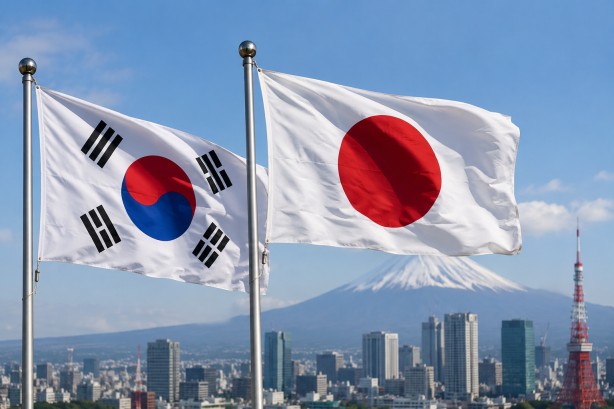
Japan’s shift towards conservatism under Prime Minister Sanae Takaichi is posing new challenges to its relationship with South Korea, as concerns grow that historical and territorial disputes might unravel recent diplomatic efforts. The two countries have been following a “two-track” approach, which attempts to separate contentious historical issues from areas where collaboration is essential, such as security and economic matters. However, a report from South Korea’s Institute for National Security Strategy highlights the risk that Japan’s political instability and rightward movements could hinder diplomatic progress between the two nations.
Recent tensions have been reignited by visits from Japanese politicians to the contentious Yasukuni Shrine and by Japan’s renewed assertion of its claim over Dokdo—referred to as Takeshima in Japan—a territory currently administered by South Korea. Although Prime Minister Takaichi refrained from visiting the shrine on the August 15 anniversary of Japan’s World War II surrender, she did send a ritual offering. This was followed by visits from several senior Japanese officials, leading to official protests from South Korea.
Despite these tensions, South Korean President Lee Jae Myung has maintained a balanced stance, recognizing historical grievances while underscoring the growing necessity of cooperation with Japan. This approach highlights the importance of maintaining diplomatic channels despite ongoing disputes.
Experts caution that without tangible progress and expanded practical cooperation, the ongoing disputes over historical issues, territorial claims, and wartime controversies could severely test the “two-track” strategy. Both nations are urged to find ways to address these contentious issues while continuing to strengthen their cooperative efforts.