
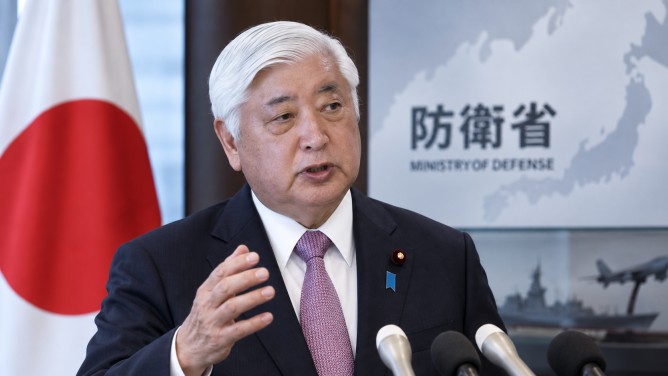
Former Japanese Defense Minister Gen Nakatani is calling on Prime Minister Sanae Takaichi to adopt a firmer stance against the U.S. sanctions targeting the International Criminal Court (ICC) and its Japanese president, Tomoko Akane. Nakatani criticized these measures, characterizing them as a threat to the rules-based international order, and urged the Japanese government to press Washington for their removal.
Nakatani argued that Japan should be able to balance its strong security alliance with the United States while upholding the rule of law and supporting the ICC. He cautioned that Japan’s failure to address this issue might weaken its credibility with both international partners and the United States. His appeal comes as Takaichi prepares for an anticipated visit to the United States for the United Nations General Assembly, where she might meet President Donald Trump. A bipartisan group of Japanese lawmakers, led by Nakatani, intends to formally present their demands to the government.
Though Takaichi has previously expressed that the U.S. sanctions against the ICC are unfortunate and not aligned with Japan’s policy, Nakatani seeks a more robust protest from Tokyo. He specifically wants the Japanese government to openly call for the withdrawal of the sanctions against Akane and the court. The United States has justified its actions by accusing the ICC of overstepping its authority, particularly in its investigations involving Israeli officials and U.S. military personnel. The sanctions imposed include restrictions on assets under U.S. jurisdiction and bans on entering the United States.
Despite the sanctions, Akane remains resolute in continuing her work with the ICC. She has encouraged Japan and other member states of the ICC to stand by the court and to persuade Washington to refrain from further escalating the situation. Her steadfastness highlights the ongoing tension between upholding international judicial processes and navigating diplomatic relationships.