
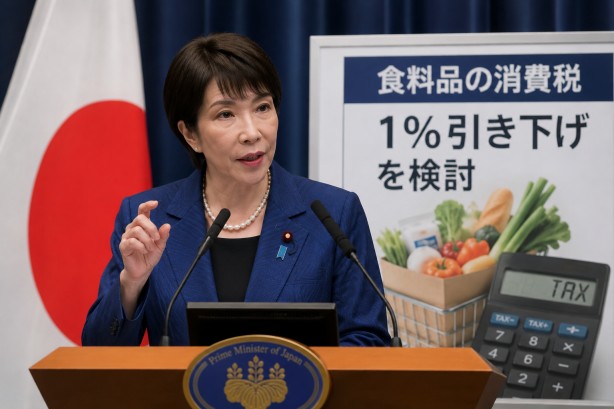
In a significant move, Japanese Prime Minister Sanae Takaichi is expected to direct the ruling Liberal Democratic Party (LDP) to advance a proposal aimed at substantially decreasing the consumption tax on food items. The plan involves reducing the tax from the current 8% to a mere 1%, and it is set to be in effect for two years beginning in April 2027.
This initiative comes after a stalemate in cross-party negotiations concerning tax reform. The government, along with the ruling coalition, is supporting not only this temporary tax cut but also additional measures to assist the country’s citizens financially. They are proposing cash aid targeted at low- and middle-income households to alleviate the economic strain of daily living costs.
To ensure that the financial burden on households is further eased, the proposal includes approximately ¥600 billion in financial support. This is part of a broader strategy to address the cost-of-living challenges faced by many Japanese families.
The government is working towards finalizing this policy by early August. The next steps involve introducing the necessary legislation during an extraordinary session of parliament later in the year. This legislative push is crucial to secure the implementation of the tax reduction by the following April, as planned.