
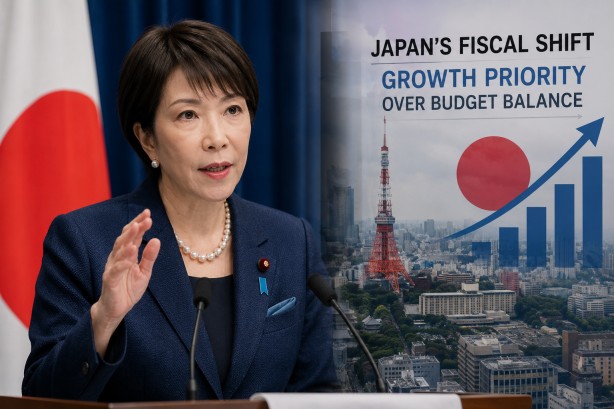
Japan has announced a significant shift in its economic policy under the leadership of Prime Minister Sanae Takaichi, moving away from its traditional emphasis on fiscal consolidation. The newly approved strategy focuses on fostering economic growth and ensuring long-term fiscal sustainability, rather than aiming for a single-year primary budget surplus. This pivot marks a notable change in the government’s financial approach.
The cornerstone of the new policy is a gradual reduction in the ratio of public debt to GDP. This goal will be supported by plans to mobilize more than ¥370 trillion in public and private investment in key sectors such as artificial intelligence by the year 2040. The emphasis on strategic sectors indicates a forward-looking approach aimed at positioning Japan’s economy for future advancements.
Included in the policy are proposals for a temporary reduction in food consumption taxes and an increase in defense spending. These measures have sparked concerns among observers about the financing mechanisms required to support them. Economists caution that the success of this strategy hinges on Japan’s ability to maintain steady economic growth and benefit from relatively low interest rates, both of which remain uncertain.
As Japan gears up to implement these ambitious plans, financial markets are expected to keep a close eye on the country’s upcoming budget decisions. Investors and analysts alike will be analyzing whether Japan can effectively balance its extensive spending initiatives with the need for long-term fiscal stability. The outcomes of these decisions will likely have far-reaching implications for Japan’s economic trajectory.